

In this article we will discuss the failure of my XDM 40 Tokyo Marui Loading Nozzle, where it failed and what could be done to prevent the failure.
I bought a Springfield XDM 40 Tokyo Marui (it is a beautiful GBB gun) from www.redwolfairsoft.com. I bought it as a practice weapon. After attending a 4 day defensive handgun course at Frontsight www.frontsight.com (Very cool place, awesome class, I had a great time and am now a lifetime member) near Las Vegas I bought this XDM 40 Tokyo Marui to practice my gun handling technique without the expense of real ammo. Of course I still enjoy getting out and shooting off a few.
Here are a couple of pictures to compare my XDM 9mm and the XDM 40 Tokyo Marui.
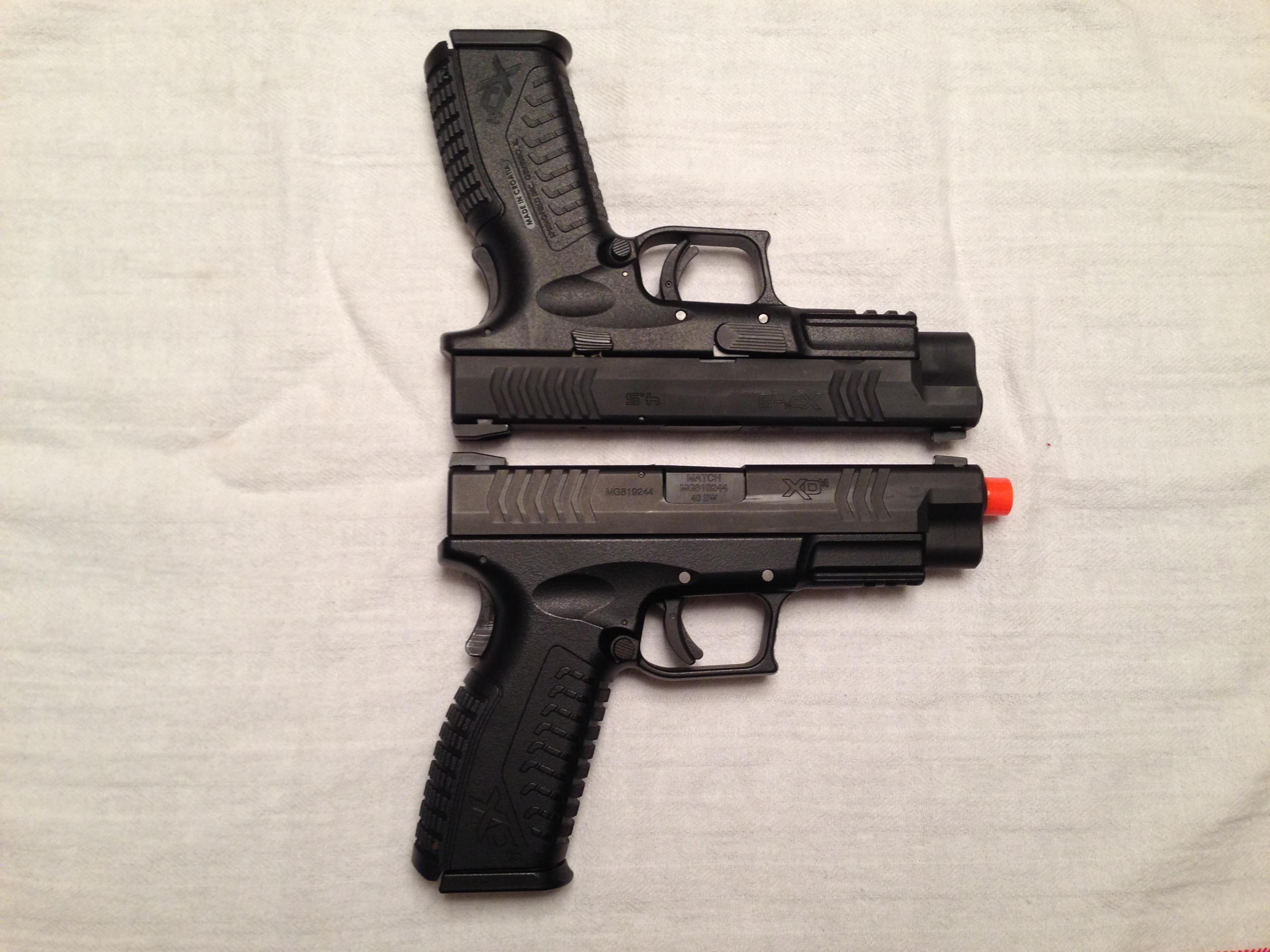
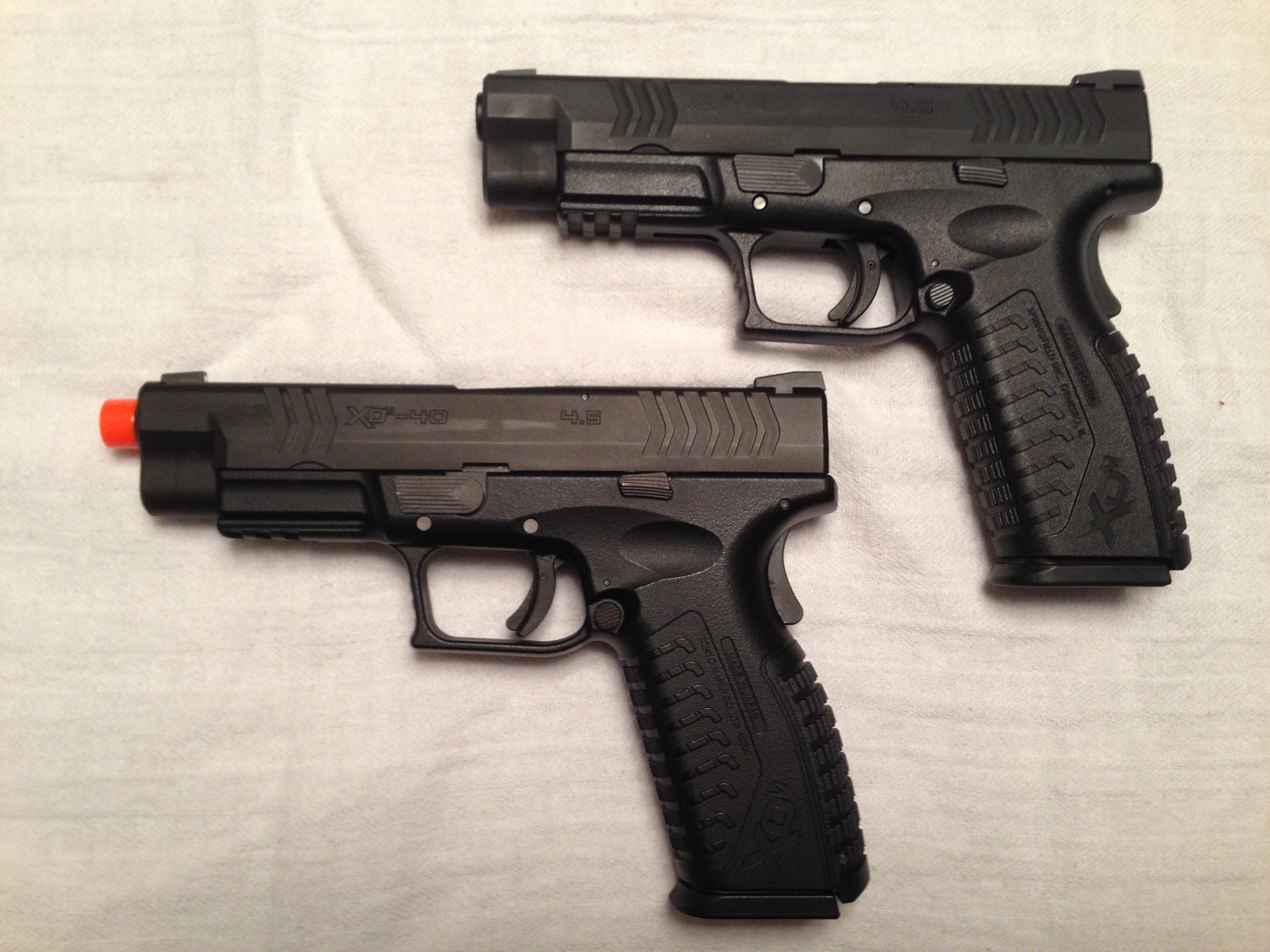
When I was looking to buy I just made the assumption that the XDM 40 Tokyo Marui used Green Gas, I did not notice that I was supposed to use r134a refrigerant as a propellant. Because I thought I was supposed to be using Green Gas I tried to find somewhere to buy it and found that people are using propane with silicone lube in place of Green Gas to save money. So I got set up to use propane.
For those of you that are using Green Gas I highly recommend doing some research into using propane instead. The cost savings is incredible. I will do another article on the cost comparison between Green Gas and Propane & Silicon Lube.
It turns out that my XDM 40 Tokyo Marui does not appear to have been designed to hold the pressure of propane, because after about 1800 shots my Loading Nozzle broke.
The following is a quick pressure comparison between Propane and r134a.
According to http://www.propanecarbs.com/propane.html Table 1, the pressure of propane ranges between 92 and 149 psi in a temp range of 60° to 90° F. And according to http://www.csgnetwork.com/r134apresstempconv.html r134a ranges between 57 and 104 psi in the same temp range.
My XDM 40 Tokyo Marui has only been shot in my basement which has a constant temp range of 65° to 70°F. So the propane that I am using should not exceed, worse case, 128 psi. It looks like I am running at <23% higher pressure than the gun seems to have been designed for.
As a side note: While writing this article I found that a Propane/Butane mix of 50/50 has about the same pressure profile as r134a. So if you can find this mix it might be a cheaper option than r134a.
Let’s start looking at the Loading Nozzle. The Loading Nozzle is where all of the magic happens in this gun. When the trigger is pulled, gas is released from the magazine into the Loading Nozzle. From here a fraction of the gas is used to propel the ball out of the barrel and the rest is used to push the slide back so that another ball can be loaded. After the ball is forced out of the barrel the rush of gas out of the front of the Loading Nozzle momentarily pulls a small gate closed. At this point pressure starts to build and the slide starts moving backward. Basically, as soon as the slide starts moving gas stops being released from the magazine, and the front gate starts to open again releasing the pressure out of the Loading Nozzle so the slide can come forward again to its home position.
To push the slide backwards, the front end of the Loading Nozzle rests against the barrel and the back-end of the Loading Nozzle is open. There is a plunger and rubber seal that is attached to the slide that fits inside the Loading Nozzle. The gas pushes on the plunger and the slide moves back.
Now that we are all familiar with the function of the Loading Nozzle we can start to look at why and how it failed. I think it is fair to say that I am using pressures outside of the designed limits, saying that, I would sure like to see their tests on pressure vs. cycles to see where those limits are for myself.
Before we look at the crack we have to talk about the material. Material is often chosen because it is the cheapest, or the easiest to work with, not because it meets all of the design requirements. But we know that sometimes the cheapest things become the most expensive. This is almost always the case when the wrong material is chosen for an application.
To get my XDM 40 Tokyo Marui back up and running I bought a replacement Loading Nozzle from Amped Airsoft www.ampedairsoft.com. It is an Airsoft Surgeon – XDM Reinforced Loading Nozzle Set(I felt that it was super expensive: $29 to my door, but this was the cheapest I could find). And from what I can tell it has the exact dimensions as the original, but is made from what I believe is a stronger material. I also just ordered a WII TECH- XDM (T.Marui) Top Gas Version Power-up Loading Nozzle set,# 03034T for $49.99 free shipping on Amazon. This is an aluminum loading nozzle with a set of stronger springs designed to handle the higher pressure of propane. I am in the process of testing these products and will update this article when I get more data.
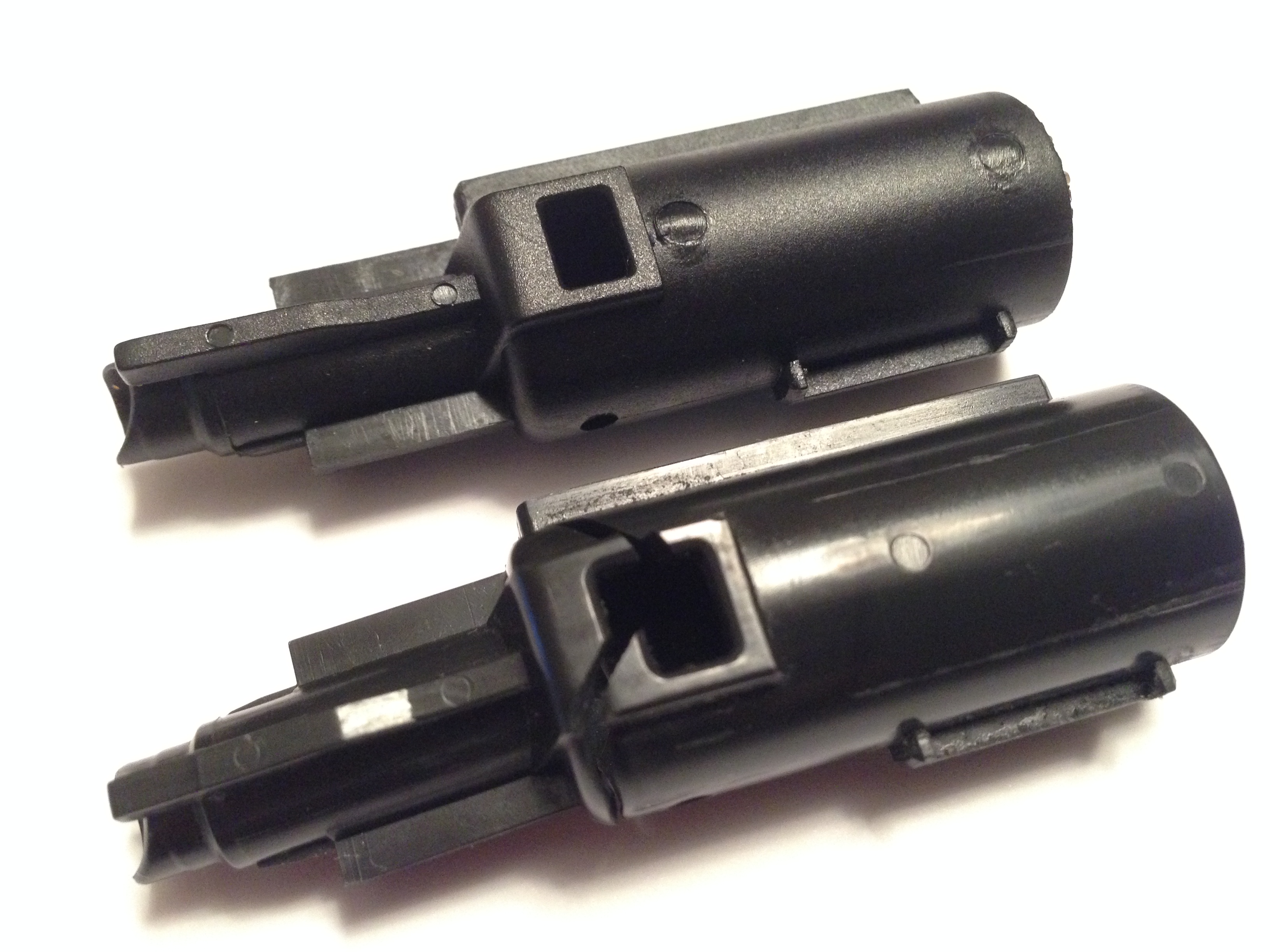
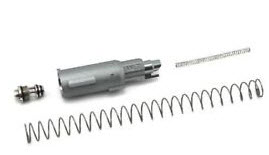
As we will discuss later in this article, this is a fatigue failure due to stress concentrators. Because I am planning to continue using propane I fully expect the same failure; hopefully I can get a few thousand shot before it breaks.
Now we should look at the crack.
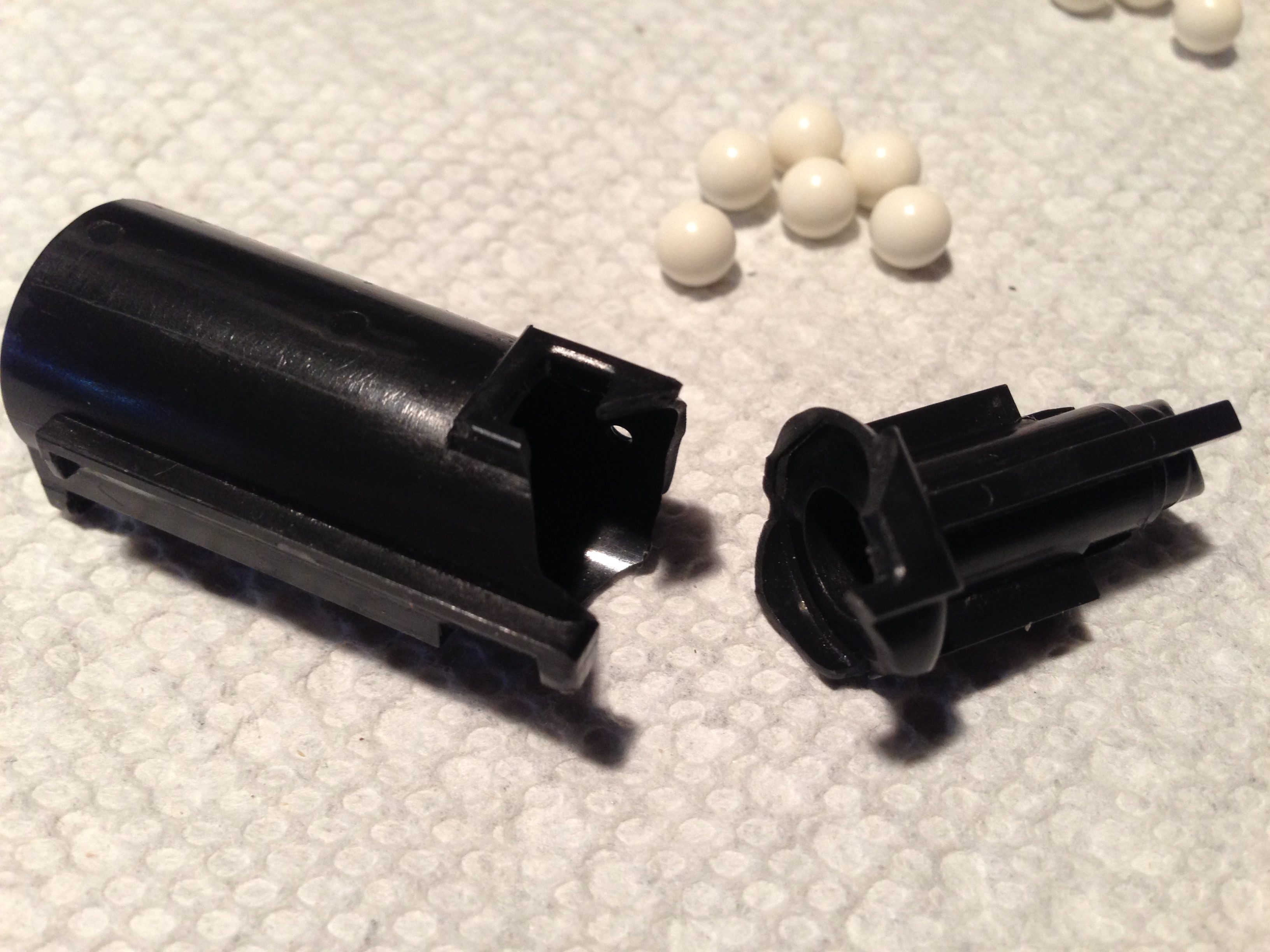
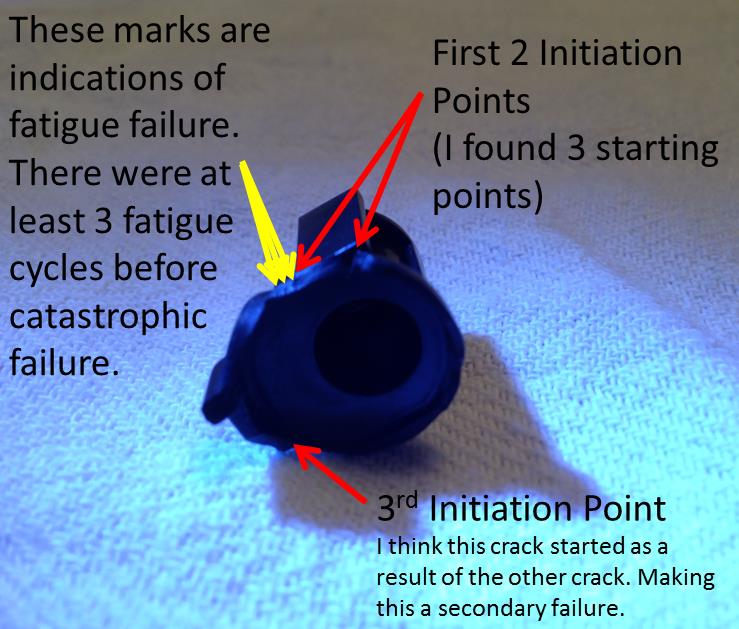
It appears to start at an intersection of three features that come together at right angles.
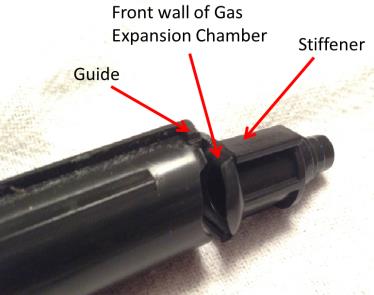
These features are known as stress risers or stress concentrators. This is because they focus the stress to one location. This happens as the structure strains to hold the gas pressure stress starts to build. Areas of higher stiffness will strain less and therefore will hold the stress better. The problem is that right at the end of the stiff section is where the stress concentrates. All 3 of these features are stiffer than the area where they meet.
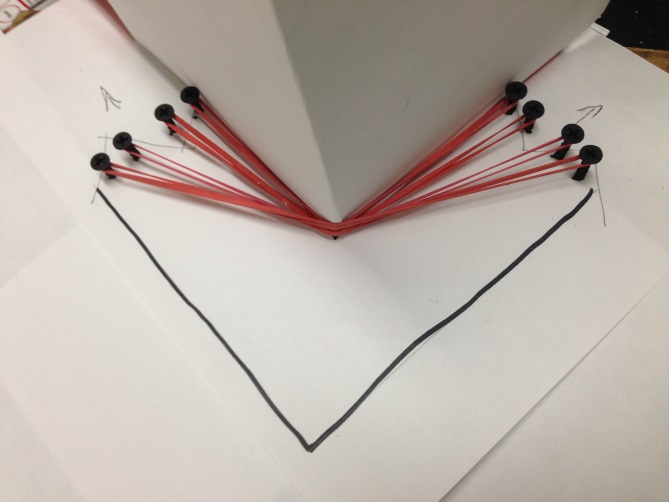
I feel that I need to take a minute and give a visual on stress concentrators. I will use rubber bands to demo the idea of stress concentration. For these demos the rubber bands will represent stress lines in a structure. The closer they are to each other the higher the stress. Also, for these examples we will assume that the member is in tension. This means that the connecting points of the rubber bands are being pulled away from each other.
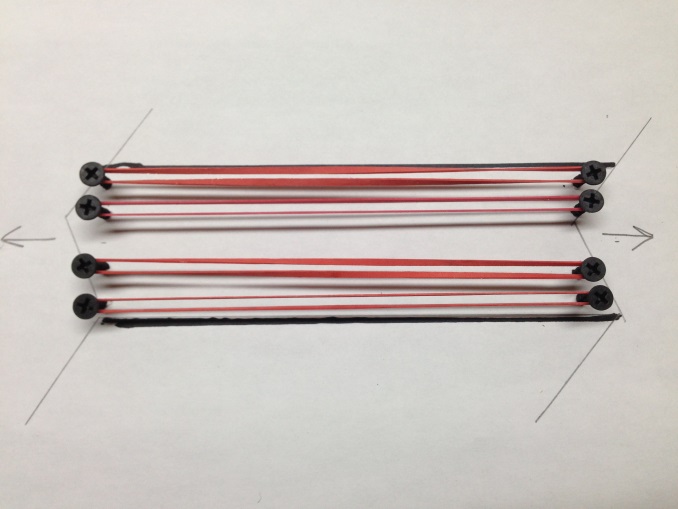
In the first picture the bands are straight and are evenly loaded. They maintain the same distance apart. There are no stress concentrations.
In the second picture the stress has to make a 90° corner. As you can see the corner has a nice smooth transition and a large radius. Any time stress changes direction you will see a concentration. In this case we are controlling the location and magnitude of the stress by the size and shape of the radius.
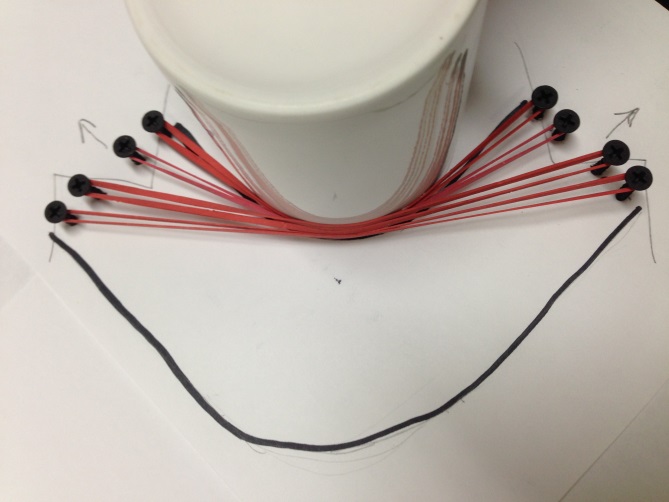
In the third picture, once again, the stress makes a 90° corner. In this example the corner comes to a sharp edge with no radius. Notice that the stress concentration is located directly on the point of the corner. Unlike the second picture where the magnitude of stress was controlled by the radius, the sharp corner becomes a stress magnifier. This concentration of stress over time will weaken the material at that point and will start a fatigue crack. This crack will propagate (get bigger) on each following cycle (shot) until the rest of the material is too weak to hold the load and then BAM, Catastrophic Failure.
The following picture gives details about this failure from my evaluation.
Design improvements:
Now that we have discussed why and how the failure happened we should discuss design changes that would improve the life of the Loading Nozzle.
- I think that Airsoft Surgeon and WII-Tech are on to something and will show that there is a better material out there for this application. I would recommend changing the material.
- The chamfer on the inside corner should be a radius and should be larger.
- The other two trouble features, the guide and the stiffener, should be connected to form a continuous stiffener along the side. In effect removing or at least reducing the stress riser.
- The walls of the Loading Nozzle could be thickened near the front of the gas expansion chamber to reduce the strain and therefore the stress in this critical area.
As I mentioned earlier, I will evaluate the two new Loading Nozzles and update this write up with the results.

Leave a Reply